Quick answer: more traffic will not fix a journey that is unclear, unconvincing or awkward on mobile. Before increasing ad spend or chasing more rankings, we check the first screen, trust, page intent, contact friction and whether the call to action matches what the visitor is ready to do.
Start with the landing page, not the traffic number
Look at the page a visitor actually lands on. Can they tell what the business does, who it is for and what happens next? If the answer needs insider knowledge, the problem is not simply traffic volume.
Check mobile before desktop
Mobile compresses the decision. Long introductions, buried phone numbers, tiny forms and competing buttons become much more obvious. For local service businesses, a good mobile route often means understanding the service, seeing proof and contacting the business within a few screens.
Move proof closer to the decision
Reviews, certifications, delivery information, case studies and real examples work hardest where hesitation appears. A testimonial section at the bottom of a long page is less useful if the visitor makes the decision much earlier.
Make the next action fit the visitor
Not everybody is ready to “book a consultation”. A local service may need Call, WhatsApp or Book. A complex website project may need Free review or Start a project. The action should feel proportionate to the decision.
Measure form starts and successful enquiries
Page views alone are weak conversion evidence. Track CTA clicks, form starts, successful submissions and calls or messaging clicks where possible. That shows where intent is being lost.
Our free website review checks this route before recommending a rebuild. You can also see how problem-first journeys are used in the Herts Cupping case study.
What we would inspect in the first 20 minutes
- The exact landing page receiving the traffic, not just the homepage.
- The first mobile screen and whether the next action is visible.
- How quickly proof appears after the proposition.
- Whether forms ask for more information than the decision justifies.
- Whether successful enquiries are actually being tracked.
A service-business example is Herts Cupping, where the customer route is built around the problem they feel rather than forcing them to choose a treatment name first. The same principle applies in ecommerce: organise the page around the buying decision, not the internal structure of the business.
Herts Cupping
Reorganise the site around what people feel and how they book, rather than asking them to understand treatment terminology first.
View case study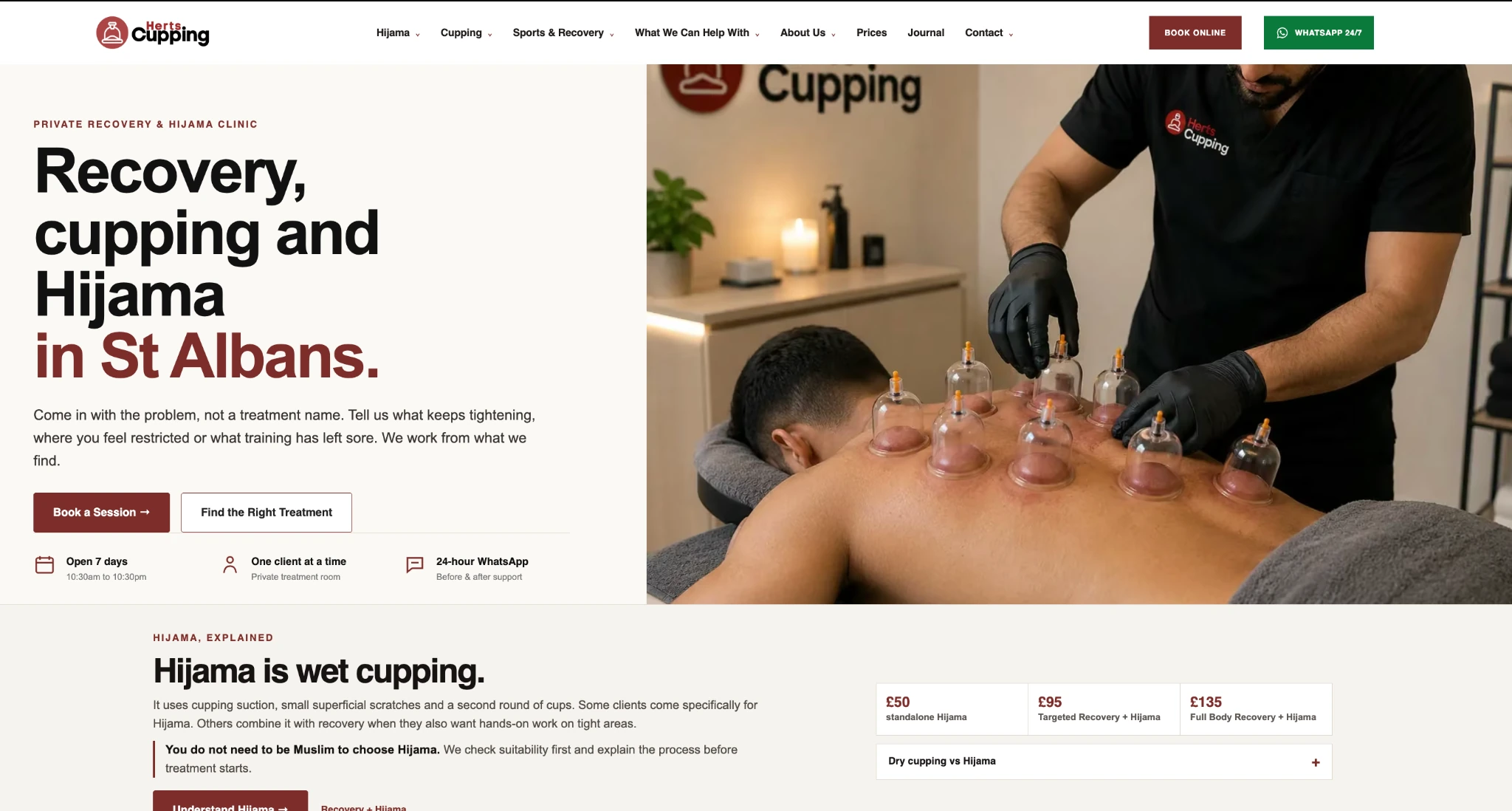
Want this applied to your business rather than just explained?
Website conversionCommon questions
What is a good website conversion rate?
There is no universal number. Lead quality, service type, traffic source and the action being measured all matter. Start by tracking the complete enquiry journey consistently.
What should I track besides page views?
CTA clicks, form starts, successful submissions, calls, WhatsApp clicks and any other action that represents genuine commercial intent.
Should I redesign before buying more ads?
Only if the current journey is clearly wasting intent. Often a focused conversion fix is enough to create a stronger landing experience without a full rebuild.